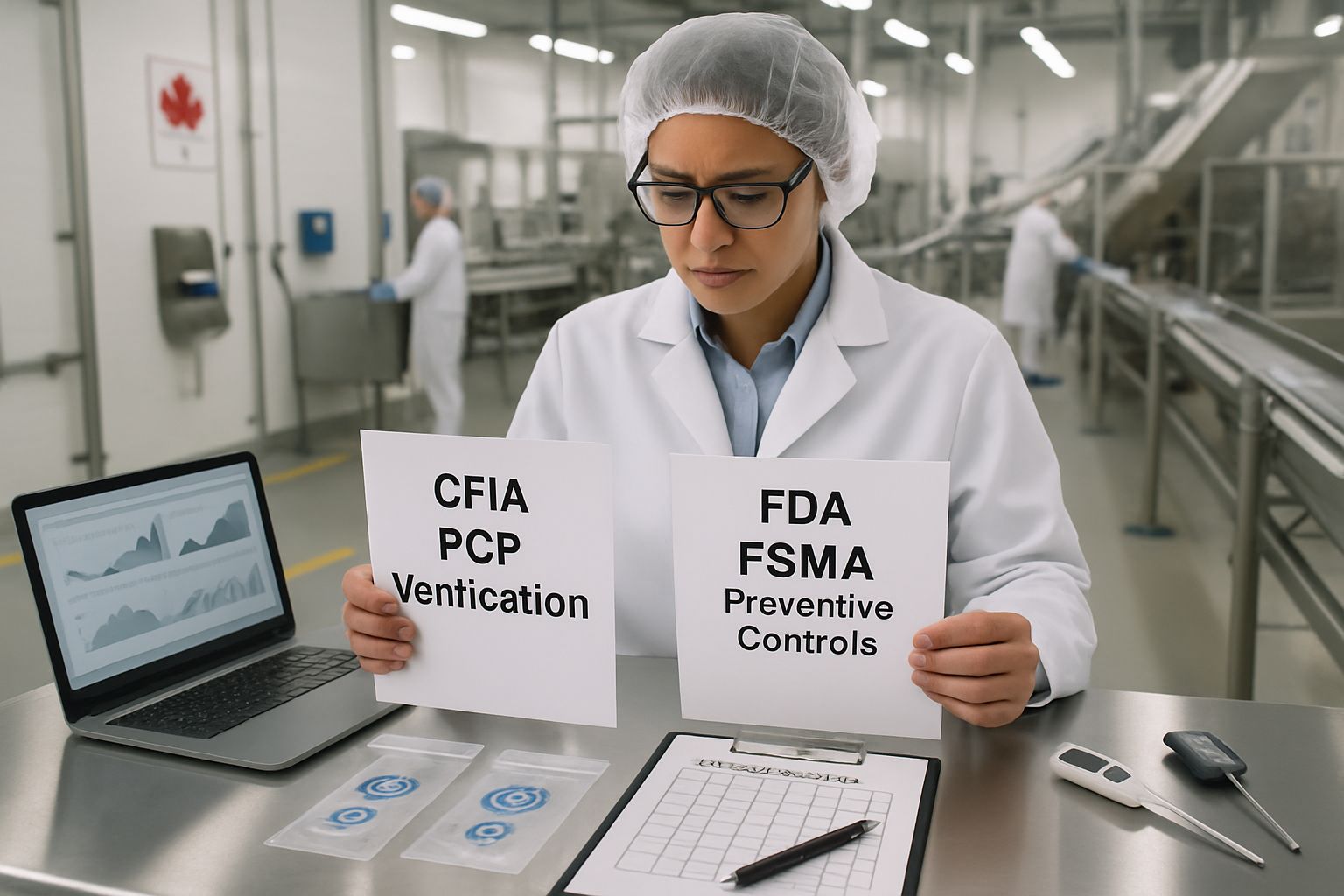
Key Takeaways An effective environmental monitoring program (EMP) for ready‑to‑eat (RTE) foods must combine risk‑based z...
Key Takeaways CFIA’s Preventive Control Plan (PCP) is outcome focused and expects manufacturers to prove control through ong...
A CFIA confirmed pathogen positive is a business continuity event, not a routine lab issue. This guide shows how to manage the first 72 hours, implement defensible product holds, run a structured investigation, and present a coherent evidence package that reduces recall scope and regulatory oversight.
ICMSF sampling plans provide a defensible framework for microbiological lot acceptance, but only when n, c, m, and M are selected and documented based on real product and process risk. This guide explains how to design audit-ready sampling plans that align with hazard analysis, validation data, and regulatory expectations.

CFIA expects microbiology testing programs to be risk-based, statistically valid, and clearly tied to the hazards identified in your Preventive Control Plan. This article explains how CFIA evaluates environmental monitoring, finished product testing, sampling plans, laboratory accreditation, and documentation when verifying control of microbiological hazards under SFCR.
Controlling Clostridium botulinum in low-acid canned foods is the highest-stakes food safety challenge a processor can face. This guide explains the critical factors regulators expect you to validate, from 12D thermal processes and cold spot identification to container integrity and deviation handling, and how to build a defensible, system-level control program that protects consumers and the business.
Validating kill steps for low-moisture foods requires more than equipment setpoints or generic studies. This guide explains CFIA expectations for low-moisture validation, why pathogens like Salmonella are harder to control at low water activity, and how to build a product-specific, defensible kill step program that stands up to audits, recalls, and export scrutiny.
MFHPB-30 and rapid Listeria tests serve very different roles when regulators are involved. This article explains why MFHPB-30 carries the most weight for CFIA decisions on plant closures and reopening, where rapid methods add operational value, and how a hybrid testing strategy reduces downtime while protecting regulatory credibility.
Selecting Listeria testing methods in Canada is now a regulatory and business-critical decision. This guide explains which microbiological methods are acceptable to CFIA and Health Canada, how Category 1, 2, and 3 methods differ, and how to build a Compendium-aligned, defensible testing strategy that protects your data, products, and brand.
Health Canada’s updated Listeria policy has raised expectations for environmental monitoring in ready-to-eat food plants. This guide explains why legacy EMPs fall short, what regulators now expect, and how to redesign a risk-based, data-driven Listeria program that stands up to CFIA and Health Canada scrutiny while supporting stable operations.
When a CFIA inspector arrives without notice, microbiology documentation determines whether the visit stays routine or escalates. This guide explains the microbiology records CFIA expects, common documentation gaps that trigger enforcement, and how to build an audit-ready system that protects your operation, products, and reputation.
Key Takeaways for Executives CFIA looks at your microbiology program as the verification engine of your SFCR Preventive Contro...
Dry foods, such as pistachios, spices, cereals, and milk powders, may appear low risk due to their lack of moisture. But in reality, they can harbor dangerous pathogens like Salmonella, Listeria monocytogenes, and E. coli O157:H7 that can survive for long periods in dry environments (1,2). These organisms don’t need water to persist, and some, like Salmonella, can become more heat-resistant when suspended in low-moisture, high-fat food matrices (3)......
We are pleased to announce that our latest peer-reviewed research article, “Construction and Functional Characterization of a Heterologous Quorum Sensing Circuit in Clostridium sporogenes,” has been officially published in ACS Synthetic Biology....
On Sep 25, 2025, CREM Co Teams, Dr. Zargar, Dr. Rahimifard, and Dr. Lefebre visited the Hans Dairy facility in Mississauga.
Food manufacturers know that a product’s shelf life is critical for quality, safety, and brand reputation. Yet microorganisms – bacteria, yeasts, and molds – can quietly sabotage shelf life, causing spoilage, food safety hazards, and even costly recalls. ...